Showing posts with label seattle community farm. Show all posts

Thursday, July 17, 2014

From the Valley to the Banks

One day a week our summer intern, Rhona, volunteers at the Rainier Valley Food Bank, which receives produce from the Seattle Community Farm. Here are some of her reflections. 

As community gardeners, we often wonder at the market value of our produce. How much money is today’s harvest worth? How many meals can it make or mouths can it feed?

At the Seattle Community Farm, Tuesdays are harvesting days. That is when the beets come up and the raspberries fall down, when the crates for delivery stack up for washing and weighing before its final destination: the food bank. And that’s where we are headed today, to see how many mouths we can feed with the produce nurtured with community hands.

It is 8 in the morning. At the Rainier Valley Food Bank, a crowd of people already wait at the front door, many with large bags and containers. The food bank doors are shut but within there is a rush of activity. Crates are unloaded and stacked in a pick-up line system, the garage is prepped for quick restocking, and volunteers are standing at each station, ready to distribute the food: a package of chicken, a few vegetables, some canned goods. The hungry are many, and the resources always go quickly.

Looking into the storage garage, where the shelves are fully stocked for the week, you realize the meaning of “group effort.” Those ten crates over there are from Lettuce Link's Seattle Community Farm, those other ten at the entrance are from local P-Patch Giving Gardens and Seattle Tilth’s Rainier Beach Urban Farm and Wetlands, and those being unloaded just now are from local grocery stores, as well as Northwest Harvest, and Food Lifeline. In the other corner being unboxed are packages of gnocchi, instant mashed potatoes, mushroom quinoa, and various snack products.

In that one food bank on that one day, there must have been over a dozen separate nonprofits, stores, and organizations that contributed to the food distributed that morning. But is it enough? The shelves are empty at the end of the day, yet familiar faces come back every week, and we ask ourselves just how many mouths can we feed? 

Because at the end of the day, when the empty crates are stacked outside awaiting restocking from the next deliveries, and when the numbers of food bank clients checked-in are calculated, I am seeing first-hand that perhaps helping stop hunger and providing food means not just providing a safety net that gives people food for a day. It’s so much more complicated than that. One piece of food justice means creating opportunities and resources for people of all backgrounds and income levels to learn how to grow their own food – skills they can use to feed their families for a lifetime.

Monday, June 30, 2014

A Crowd of Kids and Their Plot of Land

This summer at Lettuce Link we're lucky to have a stellar intern crew. Today, we're featuring the writing of Rhona, who left her home in Atlanta to spend the summer in Seattle with Lettuce Link as a DukeEngage intern.

This week we saw the first class of students from the ReWA youth program, a middle school summer program targeting refugee and immigrant youths, visit Lettuce Link’s Seattle Community Farm for the first of a five-week gardening and nutrition curriculum based at the farm. The farm team consisting of Scott, Amelia, Kelly, and a few other interns split the kids up into three small groups rotating around stations centered on cooking/nutrition, gardening, and touring the farm. 

In the garden, Scott showed off the farm highlights of the week: crops of lettuce, bok choy, snap peas, and beets among others. The kids were invited to harvest and sample the plumpest snap peas hanging off the vines, and gained interesting tidbits about each vegetable on the farm. 


In Amelia’s group, the children busily staked the ground, claiming their own small plot for planting in hopes of harvesting their own line of crop at the end of five weeks. Interns scurried to and fro from the hose refilling watering buckets as the kids enthusiastically watered theirs, and also their friends’ seeds. 

Finally, with seeds in the soil and the taste of fresh snap peas on their tongues, the last group filled out a short questionnaire and received a short nutrition lesson from Kelly. With raspberries making up the main ingredient balanced with ice, salt, honey, and lemons, everyone had the opportunity to have a glass of the natural electrolyte refreshment.

At the conclusion of the program, all the ReWA kids and the farm staff gathered for the closing circle to recap the day’s activities. “Today I learned that gardening is fun,” said one middle schooler. “Today I learned that you can make juice out of fresh fruit,” chimed in another. But as for me, the most important thing I learned was that no matter where you’re from or what your personal background, whether you’re from North Dakota or from Atlanta, from Central America or Asia, gardening is an act that brings communities together in a group effort that oversteps plots and boundaries.


Raspberry Electric
Recipe by Leika Suzumura of Community Kitchens Northwest

This is a natural homemade electrolyte drink, minus the cost or artificial colors. Get creative with different combinations that you enjoy.

Ingredients
  • 1 quart filtered water
  • 1 cup fresh berries [we used raspberries]
  • 2 tablespoons honey
  • ¼ teaspoon salt
  • Juice of 1 lemon
Instructions
  • Fill ½ gallon pitcher with filtered water.
  • Place raspberries in a bowl and gently smash them with a fork to break the skin and release juices. Pour into water.
  • Add honey, salt, and lemon juice and stir.
  • Taste and adjust to desired flavor and strength.
  • Add ice and enjoy!
Other additions:
  • You can use other berries for this drink, including strawberries, blackberries and blueberries.
  • Cucumbers in place of raspberries works well.
  • Add in fresh mint, lemon balm, or other refreshing herb to your taste.
Makes 16 ounces

Tuesday, October 15, 2013

A Tapestry of Culture at the Rainier Valley Food Bank

The produce grown at the Seattle Community Farm goes to work trade participants and the Rainier Valley Food Bank (RVFB). This summer, our intern Victoria went to the food bank each Wednesday to share information with clients about the work trade program and the Cooking Matters class at the Seattle Community Farm. Here are her thoughts on the experience:

No larger than a classroom, the distribution room of the Rainier Valley Food Bank vibrates with energy and movement every Wednesday morning. Food bank clients lug around suitcases and duffel bags of food, while volunteers shuttle crates from the warehouse to the distribution room. On the outdoor patio, clients mingle clustered by language group as they wait to enter the distribution room.

Serving one of the most diverse neighborhoods in America, the Rainier Valley Food Bank is a vibrant assembly of people. Hunger does not discriminate: people of all cultures come together at the food bank.

This combination of many cultures creates the culture of the Rainier Valley Food Bank community. Although communication is challenging since dozens of different languages are spoken, the community is unified by the goal of eliminating hunger.

Since the Rainier Valley Food Bank’s founding in May 1991, it has undergone changes in management, name, and funding. Today the food bank has three full-time employees and two AmeriCorps VISTA members. The staff does an amazing job stretching the budget, with the help of over 500 volunteers annually. A handful of these volunteers come every single week, and some have volunteered at the food bank for years.

The Rainier Valley Food Bank transformed my relationship with and awareness of food. Without the privilege of food security, food loses its glamour. Being at the food bank forced me to remove my rose-tinted glasses of privilege and view food from a more basic perspective. When people are hungry, their relationship with food is more intimate, poignant, and primal. I saw humanity in the context of food insecurity — there is a raw honesty in asking for help with something so fundamental.

When I started doing outreach at the Rainier Valley Food Bank, I was a stranger. But on my last day, an elderly woman wrapped me in a warm embrace and told me I was a good girl. In just six weeks the Rainier Valley Food Bank wove me into their tapestry of culture. Although my presence at the food bank will gently fade away with time, the community I found there is now imprinted in my being.

I am so thankful for the perspectives and acceptance I found this summer at the Rainier Valley Food Bank. I am honored that I was able to help them with their work and to strengthen the relationship between the food bank and the Seattle Community Farm.

~ Victoria, Lettuce Link DukeEngage summer intern

Thanks for your hard work and dedication, Victoria. We know that the Rainier Valley Food Bank loved having you volunteer with them this summer!

Tuesday, October 1, 2013

Learning about Pollinators

The beehives at Marra Farm emit a steady hum that fascinates children. We stop on our tours of the farm to watch the constant stream of bees on their way to and from the hive, some setting out to find nectar and pollen, others return to the hive laden with food they have collected.

When bees fly from flower to flower to collect their food, pollen sticks to their legs, allowing them to pollinate the plants they visit. Bees work nonstop during the summer to stockpile enough food to last them through the winter.

These beautiful cucumbers began as flowers cross-pollinated by bees.
Thanks, bees!

As we learn in our kids’ classes at Marra Farm, we humans should remember to thank the honeybees. We reap the benefits of their hard work, consuming not only their honey, but the literal fruits and vegetables of their labors.

Global Pollination

According to the United Nations Environment Programme (UNEP), 70% of the crops that produce 90% of the world’s food supply require pollination by bees.

A complex mix of factors has contributed to the catastrophic collapse of bee colonies around the world in recent years, including the widespread use of toxic agricultural chemicals, the decline of flowering plants, a rise in pollution, and even the globalization of food supplies – international shipping quickly spreads virulent fungal pathogens, which can wipe out entire hives.

Colony collapse disorder spells bad news for global food security. In the words of Achim Steiner, the executive director of the UNEP, “Bees underline the reality that we are more, not less, dependent on nature’s services in a world of close to 7 billion people.”

For a holistic look at the threats facing bees around the world as a result of current mainstream agricultural practices, consider watching the award-winning documentary More Than Honey.

A honeybee industriously collects pollen in the
Childrens’ Garden at the Seattle Community Farm.

Pollinator Lessons

Despite the grim future of our most vital pollinators, in our garden and nutrition education classes we focus on teaching children the important role bees play in the garden:

  • We examine the Velcro straps on a student’s shoes and learn how bees also have sticky “Velcro” on their legs that collects pollen when they buzz from flower to flower. 
  • We learn how a bee returning from a successful foraging mission performs a “waggle dance” to tell the other bees in the hive about the direction and distance to flower patches with abundant nectar and pollen. And then we do our own waggle dances! 
  • We visit flowers in the garden and observe bees collecting nectar. Then we watch as pollen from one flower brushes off a bee’s legs onto another flower. 
  • We learn about the different roles within the bee colony by dividing the class into worker bees, drone bees, and the queen bee, and then we fly around going "buzz buzz buzz!" 
By teaching the next generation about the importance of honeybees, we hope to instill appreciation for these buzzing friends and their habitats.

Bumblebees throng to the vibrant purple artichoke flowers.
The many artichokes at Marra Farm and the Seattle Community Farm
are planted expressly to attract our bee friends.


-Cordelia, summer Children's Garden and Nutrition Education intern

Thursday, September 26, 2013

Outdoor Cooking at the Seattle Community Farm


This summer at the Seattle Community Farm we hosted a six-week Farm-to-Table cooking and nutrition class series through Solid Ground’s Cooking Matters program.

The Cooking Matters curriculum emphasizes preparing healthy and delicious meals on a budget. At each class we covered different nutrition topics, including the food groups on MyPlate, how to increase fiber in your diet, and the effects of different types sugars and fats on the body. On the fifth week, we went to a local grocery store and learned tips for selecting affordable, nutritious foods.

Since we held class outside at the farm, we chose recipes that emphasized using fresh, seasonal produce. We had a great variety of yummy vegetables to choose from! Class participants harvested  greens, onions, beans, cucumbers, squash, and herbs straight out of the ground and then cooked them up right at the farm. Instead of a stove we used portable burners, and enjoyed our outdoor surroundings as we chopped, peeled, and sautéed.

At the end of each class, participants took home the recipes used that week and a grocery bag of ingredients to try preparing the dishes at home. Participants came back each week with stories of their culinary successes and impressing their family and friends.

Thanks to the Cooking Matters staff and volunteers who taught and coordinated the wonderful class, as well as all of the participants who came back each week to share and learn together. This is our second year hosting the series, and we hope to make it a yearly event.

The melon and cucumber salad was a favorite among class participants this summer, and we think you'll like it too!


Melon and Cucumber Salad with Pepper and Mint 

adapted from Deborah Madison's Vegetable Literacy
  • 1 ripe melon, such as a honeydew (about 1.5 lbs)
  • 1 cucumber, unpeeled
  • 1 or more tablespoons chopped mint
  • Grated zest of 1 lemon
  • 2 teaspoons lemon juice
  • ¼ teaspoon salt
  • ½ teaspoon ground pepper
  • 2 tablespoons olive oil
  • Mint springs
  • Goat or feta cheese (optional)
Halve and seed the melon and slice into sections. Cut flesh away from skin, then cut into bite-size pieces. Chop cucumbers into bite-size pieces. Combine melon and cucumber into a bowl.

In a separate bowl, stir together the chopped mint, lemon zest, lemon juice, salt, and pepper. Whisk in oil. Taste and adjust as needed.

Pour dressing over melon and cucumber and toss to coat. Add cheese if desired. Chill for an hour if time allows. Grind pepper over top and finish with mint springs.

Tuesday, September 24, 2013

Rainbows and Bravery Bites: Lessons from the Children's Garden

After 130 years of cultivation, the dirt at Marra Farm is like no other. 130 years is a long time. “It’s probably older than your grandma’s grandma”, I would tell the wonder-struck kids as they wandered through our sunflower forests this summer. “After 130 years, this dirt understands more about good health than we’re ever likely to know.”

Under the shade of these magnificent 10-foot tall sun-towers, we’ve been bonding with the dirt and cooking up its marvelous creations.
How do you grow magical sunflowers?
By using magical soil!
Here are seven lessons, tips, and grubby seeds left behind from our summer kids’ nutrition education classes at Marra Farm and the Seattle Community Farm.

Rainbows Rock

We built our summer series with preschoolers around the theme of colors. We prepared a rainbow of recipes: purple kohlrabi and beet hummus, orange carrot and yam mish-mash, yellow squash and eggs -- you get the idea. The kids ate it all up! The theme of colors integrates beautifully with the MyPlate nutrition guidelines. Because really, who doesn’t want to eat a rainbow?

Tuesday, September 10, 2013

Signs and Senses at the Seattle Community Farm


At the Seattle Community Farm, we've been making some exciting improvements to the Children’s Garden!

With the help of our learners from the Rainier Vista Boys and Girls Club this summer, we rehabilitated the worm bins, and learned all about worms, composting, and the nutrients the soil needs to grow healthy vegetables.

Amelia painted a big sign welcoming visitors to the Children’s Garden, and we made signs identifying all the new and interesting plants growing in the garden. We planted cilantro, radishes, spinach, and beets with our students this summer, and now visitors to the garden will know exactly what’s growing where.

We've also planted marigolds and other cheerful flowers at the end of each bed to add beauty and invite our favorite helpers, the bees, to visit our garden.

Laminated signs decorated by the children let visitors know what’s growing where.

Sensory Garden

This year we've established a Sensory Exploration Garden filled with plants that invite you to look, smell, touch, and taste. (We haven’t yet found a plant that specifically invites listening, but then, plants are generally pretty silent!)

Wednesday, August 14, 2013

Cooking in the Open Air

This summer at Lettuce Link we're lucky to have a stellar intern crew. Today, we're featuring the writing of Danielle, a UW student, food policy guru, and garden chef. 

When it’s time for cooking during our children’s classes at the Seattle Community Farm, we set up outside. Stationed under a canopy, we enjoy the fresh air while preparing our snack. Though we set up this way because there aren't any enclosed buildings at the farm, I have noticed that cooking outside is an ideal environment for engaging and educating children about food.

As I child, I spent many summers at the Boys and Girls Club of Spokane. I have great memories of my time there, but I never got to do any cooking or gardening. I am honored to be part of the Lettuce Link teaching team that puts on these classes for campers from the Rainier Vista Boys and Girls Club summer program. I know that we, along with the Boys and Girls Club staff, are creating positive memories for these kids.
Ripping up chard for Purple Plant Part Pancakes

I love seeing the joy and excitement in our students’ faces when they visit me at the cooking station. Cooking can be sometimes looked at as a chore, or something that only grownups do.

But at the outdoor kitchen of the Seattle Community Farm, everyone is a chef.

The kids see what parts of the plant we eat (or don’t eat) because they are cooking with freshly harvested produce. They chop up veggies while butterflies and bees fly by.

Our kitchen is different than their kitchens at home, and we remind our students that even though they might have tried a food before, they haven’t tried it here. This encourages trying-new-food adventurism, and the kids are often surprised with how much they like what we prepare!

When we wrap up the day and share what we learned, our students always mention how much they enjoyed the cooking station. Here at the Seattle Community Farm, cooking isn't merely the transformation of food from raw ingredients to a delicious snack. It’s an experience of seeing, feeling, and tasting your food as it moves from the soil to your mouth. 

This amazing sensory experience would simply not be possible if we had walls.

Tuesday, August 6, 2013

Teaching and Learning in the Children's Garden

This summer at Lettuce Link we're lucky to have a stellar intern crew. Today, we're featuring the writing of Cordelia, who recently moved to Seattle and is interning this summer with our Children's Garden and Nutrition Education programs.


My Food Roots

Coming from a family of “weekend farmers” - enthusiastic amateurs who spend a lot of time Googling topics such as ‘how to prune an olive tree’ - I grew up knowing the satisfaction that comes with eating food you have grown yourself, and subsequently have always been interested in issues of farming and food justice.

Like many, this interest translated into a desire for action and education – for myself as well as others. In college I edited the food section of my college newspaper and while studying abroad in Latin America, started a now-permanent column in the college paper where students studying abroad share what they have learned about the food cultures and food practices of their host country.

My other passion is working with children and I hope to become an elementary school teacher someday.

As a recent college graduate, I came to Seattle looking for a project that would allow me to continue my education about food justice and small scale, community farming while working with kids. As a summer intern with Lettuce Link’s Children’s Garden, I feel so lucky to have found an experience that allows me to engage both of these passions. 

Wednesday, June 12, 2013

Urban Farming: Abundant Harvests and Unexpected Challenges


Summer has arrived at the Seattle Community Farm! We have much going on at this small yet mighty space nestled in the Rainier Vista Housing complex.

When I arrived for a visit yesterday, Farmer Scott and the volunteers were carefully washing bok choy and harvesting cilantro. The cilantro leaves had already bolted, but it was the roots that were being harvested. Cilantro root is rarely seen in most grocery stores, but Rainier Valley Food Bank clients use it to prepare soups, curry pastes, and more. Talk about a specialty crop!

Most of the kale, mustard, lettuce, and spinach greens remain in good shape despite our recent warm weather - the greens in my garden at home have all bolted. The strawberries are almost ripe now, and then, well, there are the peas.

Nicely trellised, over eight feet high, and vines chock-full of fruit. What an abundance!

We passed another unexpected milestone at the Seattle Community Farm last week: surviving our first fire.

Scott has been collecting bags of grass clippings from the neighbors to use in the compost piles. We think that some youngsters, while experimenting with a lighter or matches, placed a burning object into one of these bags of grass clippings. Thankfully, a neighbor saw smoke billowing out from the bags and quickly reacted to put out the fire! We are most grateful to our attentive neighbors at Rainier Vista.

The fire did not damage the farm, but does serve as a reminder that we need to continue to help young people find constructive ways to spend their time.

This is one reason we’re excited for an upcoming partnership with Coyote Central this summer to work with local middle-school aged youth. Led by an artist-in-residence, the youth will design and install art at the Seattle Community Farm. The participants receive a stipend for their work, and the positive, creative results will be displayed for all to see. Stay tuned for updates and photos as the project progresses.

We’re ready for a busy summer!

~ Michelle Bates-Benetua, Lettuce Link Program Manager


Tuesday, October 23, 2012

Sprouting Young Farmers at the Seattle Community Farm

A New Idea
At the end of the summer, we tried out a new idea – what would happen if we hosted informal farm classes for kids from the Rainier Vista neighborhood? The kids who live in the houses adjacent to the Seattle Community Farm frequently visit and want to help out, learn, and explore. The farm is for them, so we decided to plan some kid-friendly garden activities and invite them to come on over.

The First Class
Though we posted fliers and planned two classes for the last week of August, we weren't sure whether anyone would show up. But we had nine kids come to the first class, ranging in age from 4 to 12!

With that wide of an age span, we kept our activities simple – a farm tour (playing 'Guess The Vegetable'), planting bok choy starts, and watering. Then it was on to cooking!

We harvested beans, tomatoes, chard, and basil. With garlic leftover from the spring and olive oil, we made a basic tomato sauce, and served it over sautéed green beans. Though it wasn't a hit with every student, each one of them tried it and many liked it. Moreover, each kid participated in the cooking process - plucking a tomato or a bean from the vine, harvesting a leaf of chard, and tearing or chopping a vegetable for the sauce.

The Second Class
For our next class, five students returned, and we welcomed a few new faces. After watering our recently-planted bok choy starts, we dug into the worm bins.

Worm bin maintenance is an ongoing task that also seems to be almost endlessly entertaining to children of all ages. We spent the time tearing newspaper, adding it to the bins, mixing it in, and looking at all the cool critters that live in the worm bins. Our students had so much to say about worms and soil that we couldn't get a word in edgewise.

Amazing Rainier Vista mom and educator Mimi was back as well, with freshly made bread and a new recipe for us to try:
Vegetable Cookies
  • 1 beet, 2 carrots, and 1 small zucchini, all grated
  • 1 egg
  • ¼ cup of flour
  • some chives, chopped
  • a couple sprigs of parsley, chopped
  • salt and pepper to taste
Mix everything together in a big bowl. Have students form batter into patties, and then pan fry in a little bit of oil, about 3 minutes on each side. Eat alone or with bread.


Tuyetlam and Tran, 
at the entrance to the Children's Garden

A Success! 
After the second class, I received an e-mail from the mother of seven-year-old Tuyetlam, one of our students. This is what Tran wrote:
“My daughter attended your classes last week and she really likes it. Thank you very much for providing this kind of opportunity to the kids. After your sections, she was willing to eat vegetables for a day or two. She wants to attend the farmer classes.”
Tran and Tuyetlam have been back to the Seattle Community Farm several times, for both our adult cooking class and for work parties. Tuyetlam is an enthusiastic worker, teacher, and learner, who hopes to have her own farm someday. We're so glad that they are both a part of our farm community! 

We hope to replicate our kids' drop-in classes next summer, and children are always welcome to help out on harvest days and at work parties, which continue through November. 


~Leah, summer outreach and education coordinator at the Seattle Community Farm

Tuesday, October 16, 2012

Cooking Matters at the Seattle Community Farm

This season at the Seattle Community Farm we hosted Rainier Vista community members and Cooking Matters and for two Farm to Table Cooking and Nutrition class series. Over six Monday evenings in June, and then again in September, we gathered at the farm, harvested food, and cooked together.

Participants enjoying orange juice and oatmeal pancakes, 
topped with SCF strawberries!
The series emphasizes cooking healthy meals on a budget. We covered nutrition topics including the five food groups on MyPlate, how to get more fiber in your diet, the effects of different types sugars and fats on the body, and much more. One week we went to a local grocery store and learned tips for selecting affordable, nutritious foods. 

Since we were cooking in the garden, we had the opportunity to emphasize using fresh, seasonal produce. We're lucky to have an amazing variety of vegetables to choose from! From early summer greens, onions, and snap peas, to the zucchini, cucumbers, and tomatoes of September veggies have been the star of the show.

This was not a traditional cooking class – we were outside, preparing food on large concrete tables, washing dishes in sinks that are primarily used for washing vegetables. Plus, the languages spoken in our class included English, Amharic, Mandarin, and Vietnamese. While we couldn't always say everything to each other we may have wanted, we could still share skills, ideas, and food. 

Participants took home a bag of ingredients for a specific recipe at the end of each class, and would return the next week with stories about trying the recipe at home, sharing it with friends and family, and their own alterations to the recipe.

My favorite recipe of the series is what I am calling Seattle Community Farm Vegetable Soup. It was simple - we harvested any vegetable that was ripe and threw it into a pot with canned tomatoes, water, and cannellini beans. We followed no recipe, but just went with what was available. It was a fabulous experience in nutritious and creative communal cooking, fresh from the farm!

Thanks to all the committed participants, who returned each week to share and learn together, as well as the amazing Cooking Matters staff and volunteer team. We can’t wait to bring people together again in the Spring to be part of collectively improving our health and our food system!


Freshly picked chard, 
ready to be added to the soup!
Seattle Community Farm Vegetable Soup

  • 1 onion, diced
  • 4 potatoes, cubed
  • 4-5 carrots, sliced
  • 1 big bunch of chard, chopped
  • 2 handfuls of sugar snap peas, chopped
  • 1 can tomatoes
  • 1 can cannellini or other white beans
  • Vegetable broth, chicken broth, or water
  • Salt and pepper to taste
In a large pot, combine water or broth, onion, tomatoes, potatoes, carrots, and beans. Bring to a boil and then simmer for 20 minutes or until vegetables are tender. Add peas and chard and cook for 5 more minutes. Season with salt and pepper and serve! 

Note: you can use whatever vegetables are available to you. This time of year, winter squash would be a great addition! 

~Leah, summer outreach and education coordinator at the Seattle Community Farm

Tuesday, October 9, 2012

Harvest Celebration at the Seattle Community Farm

Volunteer Meredith shows off our massive harvest of green and purple beans, 
soon to be picked up by the food bank!

We have much to celebrate at the Seattle Community Farm!
We've had an amazing growing season in our second year, with over 7,000 pounds of produce going to the Rainier Valley Food Bank and the participation of over 300 volunteers - and the season isn't over yet! We held a summer-long Gardening for Good Nutrition program with summer campers from the Rainier Vista Boys and Girls Club, learning in the garden and preparing healthy snacks each week. We hosted two adult cooking classes, four field trips from local preschools and summer daycamps, and connected with many new and returning volunteers. 

To celebrate all of these successes, we decided it was time for a community potluck at the farm! 

The day we selected had several other community events also occurring in Rainier Vista, so we were able to welcome many people who were out and about in the neighborhood, as well as long-time friends and supporters of the farm. People brought food to share, and the kids harvested and prepared a delicious farm- fresh salad.

We hauled the cider press over from Marra Farm, and it was a huge hit! Thanks to Amanda and our fruit tree harvest volunteers and donors for the apples – we were drinking cider as fast as we could press it!

Once again, many thanks go to all the neighbors, volunteers, Lettuce Link interns and other supporters who make the Seattle Community Farm successful. We're looking forward to celebrating with you again soon!


~Leah, summer outreach and education coordinator at the Seattle Community Farm

Tuesday, September 4, 2012

From Duke to Seattle: Kids, Zucchini and Food Systems galore


Over the next week we'll be posting wrap-up reflections from our summer interns. Today, we're featuring Wendy, who left her home in Atlanta to spend the summer in Seattle with Lettuce Link as a DukeEngage intern. She's gone back to school, leaving us to harvest giant zucchini without her.  

While sitting at Lettuce Link’s monthly staff meeting the other day, I realized that it was the last time I would see all of my coworkers gathered together in one location. Almost seven weeks had passed since I first stepped into Solid Ground’s office and surrounded myself with Lettuce Link's supportive, helpful, and knowledgeable staff. But August had arrived and it was time for me to move on.

What have I learned from my time at Lettuce Link? It’s difficult to explain the impact these passionate coworkers have had on me. They have taught me so much - probably without even realizing it. At the beginning of the summer, I had only a vague sense of how food justice and hunger intersect with many of the larger issues that plague society today.

In my first week at Lettuce Link I began to learn all about this tangled web from Sue’s introduction to volunteers at Marra Farrm (if you haven't heard it, you certainly need to make a trip down to Marra). This was the first time I had heard how climate change, immigration, the obesity epidemic, hunger, and our food system were intertwined. Why have we not spent more time improving our food system if it is a major root cause of so many social and political issues?

I feel so fortunate to have been one of Lettuce Link’s summer interns.

During the past eight weeks I have learned how hard work and persistence can reap real rewards. On my first day at Marra Farm in early June, the Seattle rain poured down in buckets, my clothes were soaked through and my fingers were numb, but because we continued harvesting through the rain, we sent over 300 pounds of vegetables to local food banks that day.

Contrast this with my last day at Seattle Community Farm, the hot crops finally started coming in and we had our largest harvest of the season to date - over 700 pounds of produce! Coming from the South, I was unsure whether or not I would even see summer hot crops in the Pacific Northwest. Imagine my surprise when we harvested 251 pounds of zucchini in one afternoon! The zucchini plants were just babies when I first arrived, and now they are large and plentiful.

One of my favorite aspects of working at Lettuce Link this summer has been much time is spent outside. Seattle summer days are (mostly) sunny and temperate. I loved spending half my day in the office and half in the garden.

Farm days are particularly nice because I worked with Lettuce Link's Children's Gardening for Good Nutrition classes. Let me work with kids, and I’m sold - I love their creativity and honesty. When the kids at the Seattle Community Farm tried radishes for the first time, almost all of them immediately wrinkled their noses and spat out the radishes with distaste. But one boy liked them from his first taste. At our most recent class, weeks later, he told me, “I like radishes. They’re spicy.”

I am sad that I will miss the final classes. One girl echoed my own thoughts when she looked up at me and said, “You’re leaving? Don’t go, Wendy.”


Friday, August 3, 2012

Seattle Community Farm Produces!

Farmer Scott with youth visiting from the
Horn of Africa Services summer program
This post originally appeared on the Rainier Valley Eats! blog. The Seattle Community Farm is one of several RaVE mini-grant recipients doing Grow, Share, Eat programming in the Rainier Valley neighborhood.

“We’ve produced almost 3,000 pounds of food this season and the heavy stuff is just starting to ripen” said Scott Behmer, head farmer, as he looked out across a field of lush crops.

Solid Ground’s Lettuce Link program coordinates the Seattle Community Farm - a creative, ambitious project that transformed an unused ½-acre of land into a productive farm which educates, inspires, and increases food security for residents of Southeast Seattle. The food grown at the Seattle Community Farm is cultivated by and shared with residents of the Rainier Vista community and wider Rainier Valley neighborhood, as well as the Rainier Valley Food Bank.

The Farm was started in 2009 from a partnership between Lettuce Link, Seattle Housing Authority and the Seattle Department of Neighborhoods P-Patch Community Gardening Program – with funding from a USDA Community Food Project Grant. Additional funding from RaVE purchased cooking supplies and books for the children’s program and helped with outreach for their work trade program.

“We just did a program with local children and it was the first they had tried some of the vegetables we are growing” said Scott “It was time to leave and we couldn’t get them to go home. They wanted more carrots!”

To learn more about the farm and how to volunteer, click here.

Monday, July 23, 2012

Honey bees at the Seattle Community Farm

We recently acquired a new addition to the Seattle Community Farm. Well, thousands of new additions actually. The Seattle Community Farm is now home to two colonies of honey bees!

Honey bees, along with birds and bats, pollinate over one third of the food that humans eat. Without honey bees it wouldn't be just honey that we would miss, but many fruits, nuts, and vegetables.

To prepare for the bee's arrival, we built a small enclosure for the hives so people can view the hives up close without having bees fly in their faces. The enclosure also prevents people from accidentally bumping the hives.

The bees came from an apiary in California, by way of the Beez Neez in Snohomish. They arrived in a wood and mesh package that contained:
  • Three pounds of worker bees 
  • One queen bee 
  • Food for the bees during their travels 
After we picked up the bee packages, we dumped them into their new hives, gave them some food to get started, and let them do their thing.

The bee travel boxes are lying in between the hives
There are three types of honey bees:
  • Drones are the male bees. Every day they fly around and look for a queen bee to mate with. Drones are only a small percentage of the bees in the hive.
  • Worker bees are underdeveloped female bees. They are the majority of the bees in the hive, and they do many different tasks. The worker bees gather nectar and pollen from flowers, raise the young bee larva, and defend the hive from intruders.
  • Queen bees are fully developed female bees. A bee colony usually has only one queen bee, and she lays all of the eggs. A queen bee can lay 1,500 eggs in a single day!
Our new bees will pollinate flowers and crops in the surrounding area, provide a great learning tool, and (we hope) give us some sweet honey.

Can you spot the queen?
Interested in beekeeping? The Puget Sound Beekeepers Association, Urban Bee Project, and Seattle Tilth's Backyard Beekeeping 101 class are great places to start!

~Farmer Scott, Seattle Community Farm

Wednesday, July 18, 2012

Bean and Chard Tacos: A Tasty, Kid-Endorsed Summer Snack

Harvesting green onions
It's finally summer at the Seattle Community Farm! In addition to the bountiful harvests of our second growing season, one of this summer's highlights is our Gardening for Good Nutrition class series with students from the Rainier Vista Boys and Girls Club. The students come once a week throughout the summer, learning about the journey of food from seed to stomach. We plant, tend, harvest, and eat together each week.

In addition to learning about the farm and seeing the work that goes into producing food for the Rainier Valley Food Bank, the students take command of the Children’s Garden, where they do everything from preparing the soil and making worm compost, to planting, watering, weeding, and exploring. During our first class of the summer, we saw some familiar faces from last summer, as well as many new ones. Students tasted fresh carrots, radishes, peas, and lettuce, with mostly positive results – carrots were a huge hit, while the late-in-the-season radishes were a bit too spicy.

Chopping ingredients
Our second class focused on People and Plant Nutrition. We used natural fertilizers to add nutrients to our soil in the Children’s Garden, and discussed how people (just like plants!) need lots of nutrients to grow and be healthy. 

We introduced students to MyPlate and prepared a delicious snack: Warm Bean and Chard Tacos, which were a hit with students at Marra Farm this spring. With a side of strawberries, this healthy snack contains foods from all five food groups on MyPlate! Most of the students loved the tacos; we fed the leftovers to the worms, who will produce more healthy soil to feed more plants to nourish more people! 

Warm Chard and Bean Tacos
Ingredients: 
  • 2 cups chard, washed and chopped
  • 1.5 cups cooked pinto beans, drained 
  • 1 Tbsp olive oil 
  • 1/2 onion, minced 
  • 2 cloves garlic, minced 
  • 2 green onions, chopped 
  • 1/2 cup cilantro, chopped 
  • Some lettuce leaves, torn or chopped 
  • Cheese (we used part skim milk queso fresco) 
  • Whole-wheat flour or corn tortillas 
Directions: Sauté onions and garlic in olive oil. After a few minutes, add beans. Then add chard and cook 2 minutes. Pile cooked mixture into a warm tortilla. Add the green onions, cilantro, lettuce, and cheese as garnishes.

~Leah, summer outreach and education coordinator at the Seattle Community Farm

Saturday, June 23, 2012

Advocacy Corner: Senate Passes Farm Bill -- so now what?

After weeks of debate, the United States Senate has passed a Farm Bill – or “Food & Farm Bill,” as many believe it should be called. First enacted over 80 years ago as a New Deal program to aid struggling farmers and feed hungry Americans, the Farm Bill has since evolved into our nation's most influential piece of food and farming legislation. It sets and enforces the rules on what we eat, how much it costs, and under what conditions it is grown. The Senate's Bill, which passed yesterday, boasts $23 billion in deficit reduction as it blueprints our food system over the next five years. Let's take a closer look.
People of the Seattle Community Farm

There is cause to celebrate, and this is largely thanks to the efforts of grassroots organizing and lobbying. The legislation eliminates direct payments to commodity farmers, which have been a blunt tool that overfund industrial, monocrop agriculture and disproportionately benefit the largest farms. Instead, there will be greater emphasis on need-based crop insurance, including more support for organic farms. Important to WA growers are increased Specialty Crop Block Grants – industry jargon meaning more money for fruits and veggies. The Senate voted to double funding for Community Food Project grants, which levy federal money for community-level food system development and currently support Lettuce Link's Seattle Community Farm.

A new local fruit and vegetable program called the Hunger-Free Community Incentive Grants offers $100 million over five years to increase purchases by SNAP (food stamp) customers at farmers markets and other healthy food retailers. Another program would introduce a five-state Farm-to-School pilot project. Summarily, the Senate's smorgasbord provides more support for rural economies, urban eaters’ access to healthy food, and equitable agricultural subsidies – all amidst a climate of funding cuts.

But there is also reason to grieve, as the Senate Bill made significant chops to the SNAP program. It is deeply troubling to see $4.5 billion in cuts to SNAP at a time when 46 million Americans are enrolled in this program, which is one of the few federal safety nets that expands and contracts based on need. According to the Community Food Security Coalition, these cuts will reduce benefits to approximately half a million food insecure families by $90 a month. Also disappointing were the underfunding of the Outreach and Assistance to Socially Disadvantaged Farmers and Ranchers program and the failure of an amendment that would have required labeling for genetically engineered foods. Senator Parry Murray has acknowledged particular concern over the reduction of SNAP (food stamps). Both Murray and Senator Maria Cantwell* were champions of economically stimulating and socially just Farm Bill reforms, and we encourage constituents to send their thanks.

What's next? Well, the food fight marches into the House of Representatives, where it must pass before Obama can sign it into law. The House had originally planned to mark-up the Bill next week, but this process has been delayed – and that is cause for concern. “Whether there is a 2012 Farm Bill or not will largely rest in the hands of the top House Republican leadership,” says the National Sustainable Agriculture Coalition. No Bill in 2012 might mean that funding levels from the 2008 Bill will continue, which are far less progressive than those proposed by the Senate yesterday. Worse still, with no 2012 Bill nor an extension of 2008’s version, all Farm Bill programs would be defunded until some relief measure was passed.

America is hungry for a Food & Farm Bill that addresses the real challenges facing everyone who eats. While the Senate's bill makes important strides towards a fairer food system, it continues to over fund surplus-oriented industrial agriculture. It does not adequately meet the needs of struggling farmers, workers and eaters -- both domestically and abroad. As we work to eliminate injustice in all its forms, we must continue to demand a better Bill. Our friends at the Northwest Farm Bill Action Group (NWFBAG) are developing a legislative agenda for the House session – whenever it happens – and we encourage you to stay tuned to their website or facebook page. In the meantime, you can Dine Out to support local efforts to organize for a healthier Farm Bill! This Monday, June 25 from 4-10pm, NWFBAG group invites you to Local 360 in Belltown. A percentage of all checks will go towards this Seattle-based group's work to educate and advocate for good food for all.

*Not from WA? See how your Senators voted here

Tuesday, May 29, 2012

Farmer Scott's Five Easy Steps for Planting


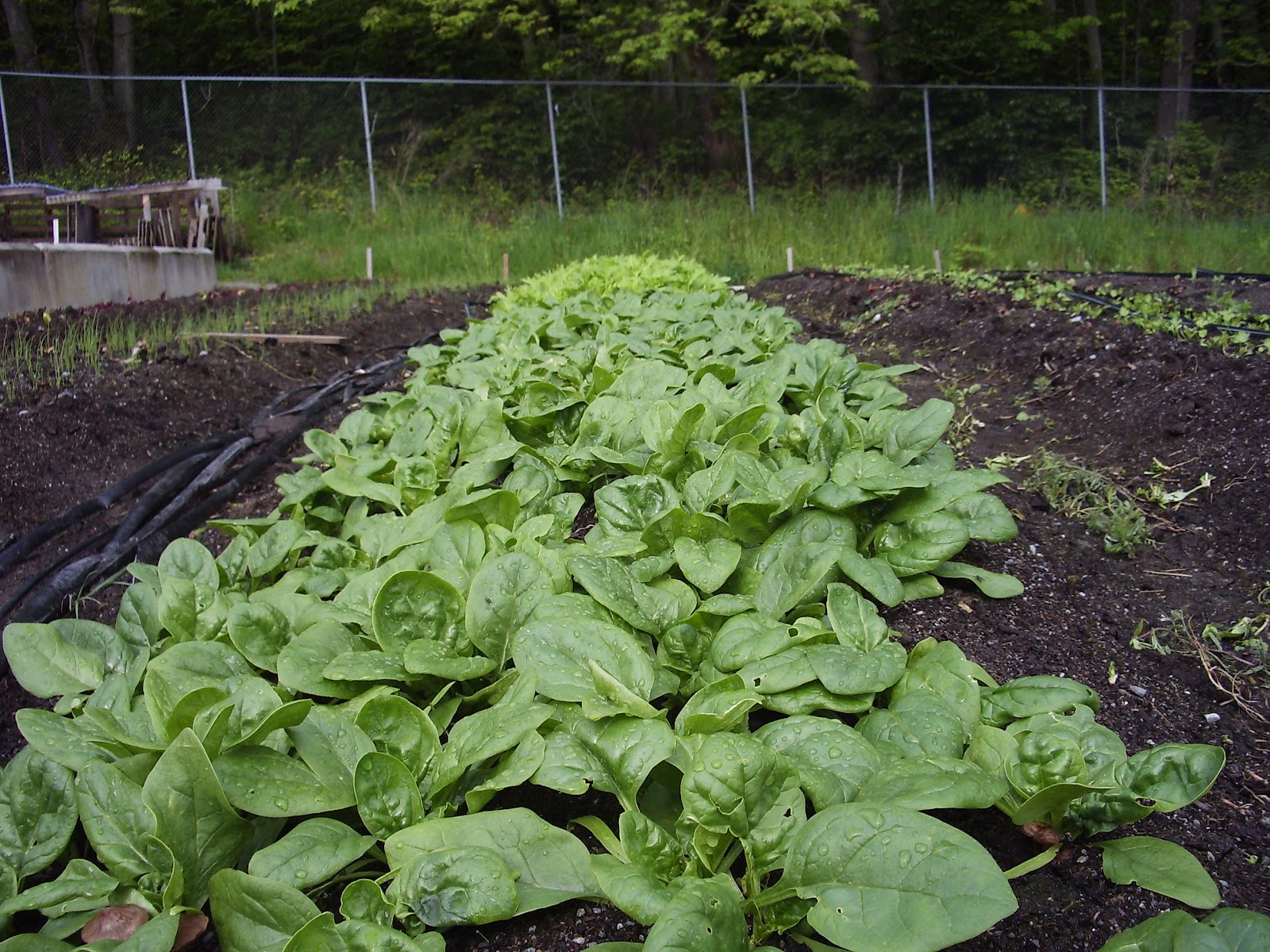
Luscious spinach, ready for harvest
How many spring crops can you name? Chances are, we planted it at the Seattle Community Farm this spring. In March and April our volunteers planted peas, lettuce, mustard greens, turnips, chard, collards, kale, beets, carrots, green onions, and more!

We've already seen the results of their labor, harvesting bins of spinach and other salad greens for the Rainier Valley Food Bank.

Now that the spring crops are in the ground, we've started the next round of planting - yummy summer crops such as tomatoes, cucumbers, and beans.

Since creating healthy soil is an integral part of growing food, we spend a lot of time in the dirt. Here’s how we prepare a bed for planting while building the soil:

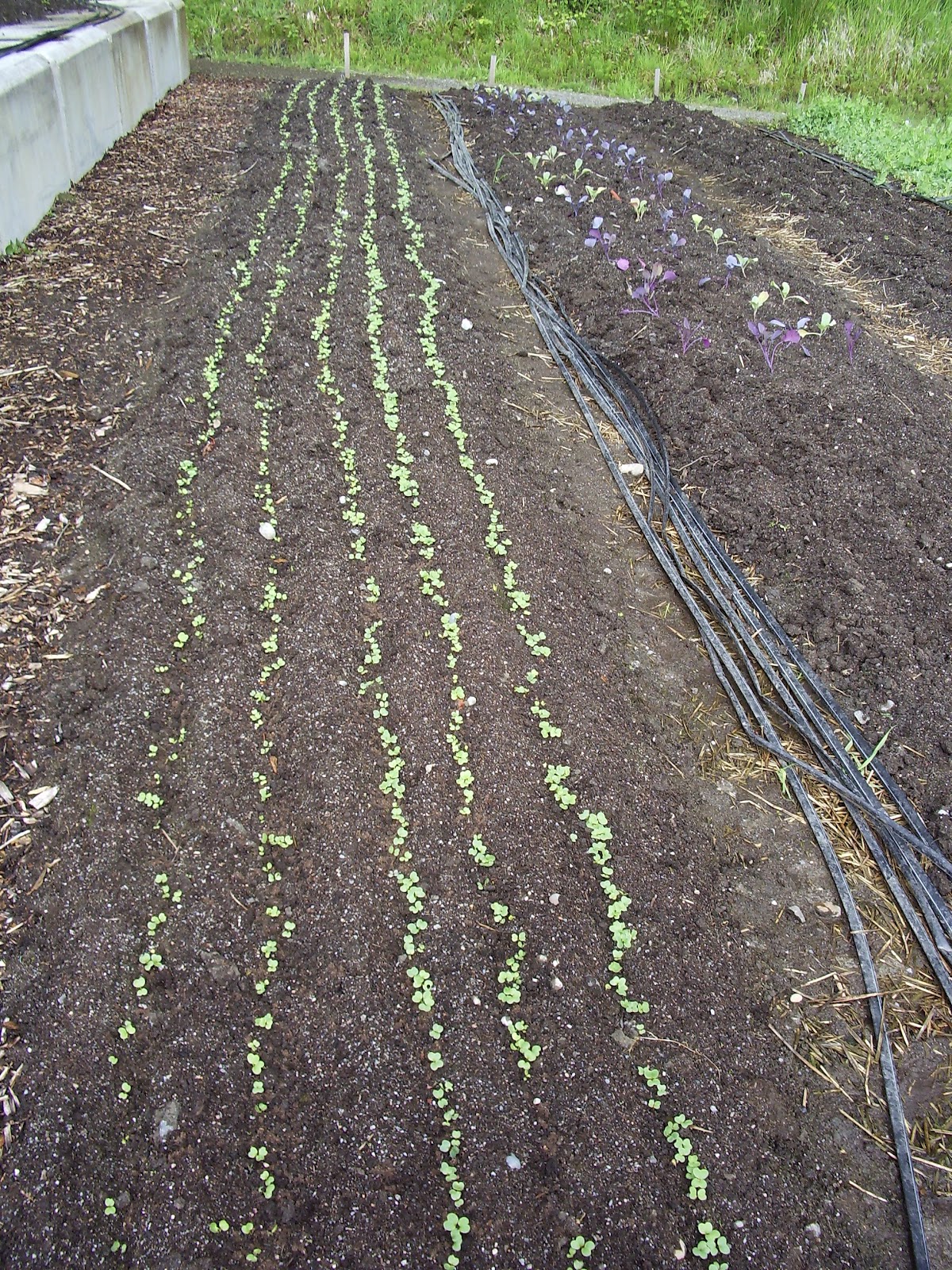
  1. We top off the compost with organic fertilizer and mix it all into the soil. If the bed still has cover crop leftover from the winter, we turn the soil, burying the cover crop. The buried cover crop then decomposes for a couple weeks, putting nutrients back into the soil. (If we’re in a hurry to plant the bed, we’ll just pull out the cover crop rather than wait for it to decompose.)

  2. Next we add compost to improve the soil structure and add nutrients for the plants.

  3. We then smooth everything out and use a hoe to make rows.

  4. After planting, we frequently cover the bed with a row cover. This fine-mesh fabric keeps the birds out, raises the soil temperature, and retains moisture in the soil.

  5. Then we keep the seeds moist while waiting them to pop their leaves out of the soil.
Spring radishes

Wednesday, January 4, 2012

2011 and Beyond: Joys, Challenges and New Directions


Welcome to 2012! On these gloomy January days (when we are rather glad to be warm and dry indoors rather than out in the garden), it's a good time to pause and take stock of where we've been and where we're going.

So, without further ado, here are a few of our accomplishments in 2011, made possible by the help of our generous volunteers (over 9,329 volunteer hours!) and financial supporters:
  • Provided seeds, plant starts and gardening information for 3,695 food bank clients at 23 different locations
  • Supported gardeners at 49 P-Patches to grow and share over 17,000 pounds of organic produce for food banks and meal programs (with only half of the gardens reporting)
  • Distributed seeds, starts and resources to 13 community gardens at schools, low-income apartments, food banks and churches
  • Held community meetings and garden classes (in 5 languages), built a shed, fences and tables, planted, tended a grew 3,023 pounds of vegetables for the Rainier Valley Food Bank and community work-trade participants in our inaugural season at the Seattle Community Farm! 
  • Taught nutrition, organic gardening and ecology at the Seattle Community Farm and Marra Farm, reaching over 170 children
  • Harvested 4,605 pounds of local fresh fruit that would otherwise go to waste for food banks and meal programs across the city
  • Held events to raise $20,000 in needed funds. Thank you Friends of Lettuce Link!
And yet, as we catch our breath this winter after a busy year, we've found ourselves at a bit of a crossroads. Fewer grants, budget cuts and belt-tightening measures provide an opportunity to reassess our work - what are our program's strengths? What do we do that's unique? How can we continue to grow and change our program to meet community needs, provide wrap-around services for Solid Ground participants and further our anti-racism work?

These are not easy questions, but we're committed to working through them with your support. Here are a few exciting projects to keep an eye out for in 2012:
  • Building an overhead structure at the Seattle Community Farm, which will allow protection from the elements and make the space more conducive to community gatherings
  • Expanding our CSA at Marra Farm, to both raise funds for our program and offer a sliding-scale subscription to our neighbors
  • Advocating for just food policies on the city, state and federal level. Watch this space for details in the next few days! 

Thank you for your time, resources and support both this past year and as we boldly stride into 2012 - pushing a wheelbarrow and wearing our rainboots!

The Lettuce Link team - Michelle, Sue, Scott, Robin, Amelia, Mariah and Blair

(with much gratitude to Molly, Kate, Andrea, Sophie and Alice, our staff, AmeriCorps volunteers and interns who have moved on to new adventures)